Cardioids in Coffee Cups

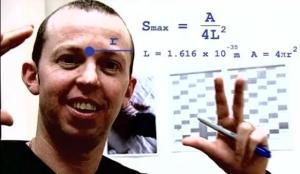
Cardioids in Coffee Cups Numberphile have just done a nice video on how a cardioid shape is formed when a light is shone against the side of a mug. You can see this effect above (from the Numberphile video here). So, I decided to recreate this using Geogebra to get to understand some of the... Continue Reading →

Looking for a pre-Ice Age civilisation?

Looking for a pre-Ice Age civilisation? An interesting thought experiment is to consider the rise of modern civilisation and to ask whether civilisations could have risen in the long distant past. Let's look at some graphs to see the plausibility of the climatic side of this. Firstly we can see on this graph (source here)... Continue Reading →

Buffon’s needle: Calculating pi

Buffon's needle: Calculating pi The following problem, first posed in the 1700s by the Comte de Buffon has a surprising solution which can be used to generate pi.  This is a nice example of probability games which can generate mathematical results over repeated trials (the Monte Carlo method). Here is the original problem: "Suppose we... Continue Reading →

Lattice based cryptography

Lattice based cryptography With the growing possibility of quantum computing being able to crack RSA encryption (the encryption technique which currently secures most banking and digital communications), the search is underway to find quantum-computing proof encryption.  One potential possibility is lattice based cryptography - so I will explore the basics of this below! Creating a... Continue Reading →

Lissajous Curves: Roller Coasters

Roller Coaster design This post continues from the previous post on Lissajous Curves.  Make sure to read that one first! We can design a rollercoaster track by using the following Lissajous Curve: This gives the following graph: Ground level is given by the line y = −50. Distances are in metres and t is measured... Continue Reading →

AI Masters Olympiad Geometry

AI Masters Olympiad Geometry The team behind Google's Deep Mind have just released details of a new AI system:  AlphaGeometry This has been specifically trained to solve classical geometry problems - and already is now at the level of a Gold Medalist at the International Olympiad (considering only geometry problems).  This is an incredible achievement... Continue Reading →

Lissajous Curves

Lissajous Curves Lissajous Curves were explored by French Physicist Jules Lissajous in the 1850s.  The picture above (Wikimedia Commons) shows him investigating Lissajous curves through a telescope. Lissajous curves include those which can be written in the form: This parametric form allows us to represent complicated curves which are difficult to write in terms of... Continue Reading →

Using matrices to make fractals

Using matrices to make fractals We start with a triangle ABC, with coordinates 𝐴(0,0) , 𝐵(1,0) , 𝐶( 0,1) as shown above.  We can this triangle F_0 and we then write this as the following matrix: We then have the following algorithm to generate the next triangle F_1. In effect this means that the triangle... Continue Reading →

Chi Square: Language Recognition II

Chi Square: Language Recognition II I thought I would build on the last post by making a simple spreadsheet that can then easily show which language is being used.  I chose the groupings of letters such that as long as there are at least 1000 letters in the text it will satisfy the Chi square... Continue Reading →

Ladybirds vs Aphids

Ladybirds vs Aphids At t=0 we have a ladybird on the edge of a leaf at point A(0,10) in cm, and an aphid at point B(0,10).  The ladybird is in pursuit of the aphid.  In each time interval of 1 second the ladybird travels 1cm by heading towards the aphid following the shortest straight-line path. ... Continue Reading →

New IB teacher and IB student resources added

New IB teacher and IB student resources added I've just added a lot of new free content to support both students and teachers in the IB Mathematics course.  This includes: Paper 3 Paper 3 resources:  13 full exploration questions with full markschemes.  This is a selection of the Paper 3 investigations I’ve made over the... Continue Reading →

New teacher and student resources

I've just made a big update to both the teacher and student resources sections: Student resources These now have some great free resources for students to help them with the IB maths course - including full course notes, formula books, Paper 3s, an Exploration guides and a great mind-map.  Make sure to check these all... Continue Reading →

Volume optimization of a cuboid

Volume optimization of a cuboid This is an extension of the Nrich task which is currently live - where students have to find the maximum volume of a cuboid formed by cutting squares of size x from each corner of a 20 x 20 piece of paper.  I'm going to use an n x 10 rectangle... Continue Reading →

Projective Geometry

Projective Geometry Geometry is a discipline which has long been subject to mathematical fashions of the ages. In classical Greece, Euclid’s elements (Euclid pictured above) with their logical axiomatic base established the subject as the pinnacle on the “great mountain of Truth” that all other disciplines could but hope to scale. However the status of... Continue Reading →

Modeling hours of daylight

Modeling hours of daylight Desmos has a nice student activity (on teacher.desmos.com) modeling the number of hours of daylight in Florida versus Alaska - which both produce a nice sine curve when plotted on a graph.  So let's see if this relationship also holds between Phuket and Manchester. First we can find the daylight hours... Continue Reading →

Fun with Functions!

This post is inspired by the Quora thread on interesting functions to plot. The butterfly This is a slightly simpler version of the butterfly curve which is plotted using polar coordinates on Desmos as: Polar coordinates are an alternative way of plotting functions - and are explored a little in HL Maths when looking at... Continue Reading →

Log Graphs to Plot Planetary Patterns

Log Graphs to Plot Planetary Patterns This post is inspired by the excellent Professor Stewart's latest book, Calculating the Cosmos. In it he looks at some of the mathematics behind our astronomical knowledge. Astronomical investigations In the late 1760s and early 1770s, 2 astronomers Titius and Bode both noticed something quite strange - there seemed... Continue Reading →

Modeling with springs and weights

This is a quick example of how using Tracker software can generate a nice physics-related exploration.  I took a spring, and attached it to a stand with a weight hanging from the end.  I then took a video of the movement of the spring, and then uploaded this to Tracker. Height against time The first... Continue Reading →

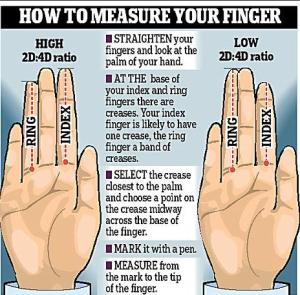
Finger Ratio Predicts Maths Ability?

Finger Ratio Predicts Maths Ability? Some of the studies on the 2D: 4D finger ratios (as measured in the picture above) are interesting when considering what factors possibly affect mathematical ability.  A 2007 study by Mark Brosnan from the University of Bath found that: "Boys with the longest ring fingers relative to their index fingers... Continue Reading →

Amanda Knox and Bad Maths in Courts

Amanda Knox and Bad Maths in Courts This post is inspired by the recent BBC News article, "Amanda Knox and Bad Maths in Courts."   The article highlights the importance of good mathematical understanding when handling probabilities - and how mistakes by judges and juries can sometimes lead to miscarriages of justice. A scenario to give to... Continue Reading →

P3 Calculus May 2016 – some thoughts

IB HL Calculus P3 May 2016:  The Hardest IB Paper Ever? IB HL Paper 3 Calculus May 2016 was a very poor paper.  It was unduly difficult and missed off huge chunks of the syllabus.  You can see question 5 posted above. (I work through the solution to this in the next post).  This is so... Continue Reading →

Alan Turing Cryptography Competition

Alan Turing Cryptography Competition Manchester University are running their 5th Alan Turing Cryptography Competition this January.  It's aimed at secondary and post 16 students.  If you are in the UK and in year 11 or below you can register for the official prizes, for everyone else you can still register and see if you make... Continue Reading →

IB HL Calculus Option Videos

IB HL Calculus Option Videos For those students studying the IB Maths Higher Level Calculus option, I've just finished putting together video playlists to cover the whole option syllabus.  These include both videos teaching the course content and also worked past paper solutions.  Hopefully this should make what is a demanding unit a little bit... Continue Reading →

Intermathematics: a new site

If you are a teacher then please also visit my new site:  intermathematics.com. My new site has been designed specifically for teachers of mathematics at international schools.  The content now includes over 2500 pages of pdf content for the entire SL/HL Analysis and SL/HL Applications syllabus Some of the content includes: Original pdf worksheets (with... Continue Reading →

The Chinese Remainder Theorem

The Chinese Remainder Theorem is a method to solve the following puzzle, posed by Sun Zi around the 4th Century AD. What number has a remainder of 2 when divided by 3, a remainder of 3 when divided by 5 and a remainder of 2 when divided by 7? There are a couple of methods... Continue Reading →

Powered by WordPress.com.

Up ↑