https://www.youtube.com/watch?v=UK8Y_FDyDbg The Poincare Conjecture and Grigori Perelman In 2006 the Russian mathematician Grigori Perelman was awarded the mathematical equivalent of the mathematical Nobel prize (the Fields Medal). He declined it. In 2010 he was the first mathematician to be awarded $1 million - he turned it down. What had Perelman done to achieve such (apparently... Continue Reading →
Batman and Superman Maths
Batman and Superman Maths Wolfram Alpha is an incredibly powerful mathematical tool - which has been developed to allow both complex calculations and data analysis. It is able to generate images like that shown above, of the Batman logo. What's really impressive however is that you can see the underlying graph input that would generate... Continue Reading →
Zeno’s Paradox – Achilles and the Tortoise
http://www.youtube.com/watch?v=skM37PcZmWE Zeno's Paradox - Achilles and the Tortoise This is a very famous paradox from the Greek philosopher Zeno - who argued that a runner (Achilles) who constantly halved the distance between himself and a tortoise would never actually catch the tortoise. The video above explains the concept. There are two slightly different versions to... Continue Reading →
Fourier Transforms – the most important tool in mathematics?
Fourier Transform The Fourier Transform and the associated Fourier series is one of the most important mathematical tools in physics. Physicist Lord Kelvin remarked in 1867: "Fourier's theorem is not only one of the most beautiful results of modern analysis, but it may be said to furnish an indispensable instrument in the treatment of nearly... Continue Reading →
Non Euclidean Geometry V – The Shape of the Universe
Non Euclidean Geometry V - Pseudospheres and other amazing shapes Non Euclidean geometry takes place on a number of weird and wonderful shapes. Remember, one of fundamental questions mathematicians investigating the parallel postulate were asking was how many degrees would a triangle have in that geometry- and it turns out that this question can be... Continue Reading →
Non Euclidean Geometry IV – New Universes
This post follows on from Non-Euclidean Geometry – An Introduction – read that one first! Non Euclidean Geometry IV - New Universes The 19th century saw mathematicians finally throw off the shackles of Euclid's 5th (parallel) postulate - and go on to discover a bewildering array of geometries which no longer took this assumption about... Continue Reading →
Non Euclidean Geometry III – Breakthrough Into New Worlds
Non Euclidean Geometry - Spherical Geometry This article follow on from Non Euclidean Geometry - An Introduction - read that first!Most geometers up until the 19th century had focused on trying to prove that Euclid's 5th (parallel) postulate was true. The underlying assumption was that Euclidean geometry was true and therefore the 5th postulate must... Continue Reading →
Non-Euclidean Geometry II – Attempts to Prove Euclid
Non-Euclidean Geometry - A New UniverseThis post follows on from Non-Euclidean Geometry - An Introduction - read that one first! The Hungarian army officer and mathematician Johan Bolyai wrote to his father in 1823 in excitement at his mathematical breakthrough with regards to the parallel postulate. "I have created a new universe from nothing." Johan... Continue Reading →
Non Euclidean Geometry – An Introduction
Non Euclidean Geometry - An Introduction It wouldn't be an exaggeration to describe the development of non-Euclidean geometry in the 19th Century as one of the most profound mathematical achievements of the last 2000 years. Ever since Euclid (c. 330-275BC) included in his geometrical proofs an assumption (postulate) about parallel lines, mathematicians had been trying... Continue Reading →
IB Higher Level Video Past Paper Worked Solutions
One of the main benefits of flipping the classroom is allowing IB maths students to self-teach IB content. There are currently a good number of videos on youtube which allow students to self teach syllabus content, but no real opportunity to watch videos going through IB Higher Level past paper questions. So, I've started to... Continue Reading →
The Telephone Numbers – Graph Theory
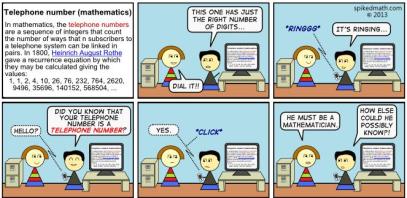
The Telephone Numbers - Graph Theory The telephone numbers are the following sequence: 1, 1, 2, 4, 10, 26, 76, 232, 764, 2620, 9496... (where we start from n=0). This pattern describes the total number of ways which a telephone exchange with n telephones can place a connection between pairs of people. To illustrate this... Continue Reading →
Friendly Numbers, Solitary Numbers, Perfect Numbers
Happy Numbers Happy numbers are defined by the rule that you start with any positive integer, square each of the digits then add them together. Now do the same with the new number. Happy numbers will eventually spiral down to a number of 1. Numbers that don't eventually reach 1 are called unhappy numbers. As... Continue Reading →
Using Chi Squared to Crack Codes
This is inspired from the great site, Practical Cryptography which is a really good resource for code making and code breaking. One of their articles is about how we can use the Chi Squared test to crack a Caesar Shift code. Indeed, if you use an online program to crack a Caesar shift, they are... Continue Reading →
Why Do England Always Lose on Penalties?
Statistics to win penalty shoot-outs With the World Cup nearly upon us we can look forward to another heroic defeat on penalties by England. England are in fact the worst country of any of the major footballing nations at taking penalties, having won only 1 out of 7 shoot-outs at the Euros and World Cup.... Continue Reading →
Circular inversions II
Circular inversions II There are some other interesting properties of circular inversions. One of which is that they preserve the "angle" between intersecting circles. Firstly, how can circles have an angle between them? Well, we draw 2 tangents to both the circles at the point of intersection, and then measure the angle between the 2... Continue Reading →
Crypto Analysis to Crack Vigenere Ciphers
Crypto Analysis to Crack Vigenere Ciphers (This post assumes some familiarity with both Vigenere and Ceasar Shift Ciphers. You can do some background reading on them here first). We can crack a Vigenere Cipher using mathematical analysis. Vigenere Ciphers are more difficult to crack than Caesar Shifts, however they are still susceptible to mathematical techniques. ... Continue Reading →
It is Rocket Science
It is Rocket Science Maths is an essential part of both space travel and satellite programs. Satellites are one of the most important technologies we have - used for rapid communication, TV signals, weather forecasting, navigation through GPS positioning, surveillance (including spying), mapping land, monitoring ecological change as well as for telescopes to look deep... Continue Reading →
Championship Wages Predict League Position?
Following on from the data released a couple of weeks ago about Premier League clubs' financial data, the data from the Championship (England's second tier) have just been published by the Guardian. These are from 12 months ago (the most recent data available). The Championship is famously very competitive - so it will be interesting... Continue Reading →
NSA Code Breaking Puzzle Number 2
NSA Code Breaking Puzzle Number 2 Here is the second of the NSA's code breaking tweets - crack them all and you might have a chance of a job with the super-secret digital spying agency. Rimfinnpeqcnvqauuagcrdokvdisn drdcrpigaisacpsdffaicvhakcfdqfpq detrkilfaecnpqacakqisacpfampoa cfimannicfakdumfalddnraprf After a few attempts it looks a bit harder than the first one - it's not... Continue Reading →
Modelling Infectious Diseases
If you are a teacher then please also visit my new site: intermathematics.com for over 2000+ pdf pages of resources for teaching IB maths! Modelling Infectious Diseases Using mathematics to model the spread of diseases is an incredibly important part of preparing for potential new outbreaks. As well as providing information to health workers about the levels... Continue Reading →
Circular Inversion – Reflecting in a Circle
Circular Inversion - Reflecting in a Circle This topic is a great introduction to the idea of mapping - where one point is mapped to another. This is a really useful geometrical tool as it allows complex shapes to be transformed into isomorphic (equivalent) shapes which can sometimes be easier to understand and work with... Continue Reading →
Code Breakers Wanted by the NSA
Code Breakers Wanted by the NSA The American National Security Agency have just launched a new code breaking challenge. The tweet above is the first in their series for those interested in a career in code breaking. The NSA are possibly in search of some good publicity after the revelations of Edward Snowden with... Continue Reading →
Premier League Wages Predict League Positions?
Is there a correlation between Premier League wages and league position? Let's explore this by looking at the 2012-13 Premier League season data analysis - which shows exactly how much each club in the Premier League spent on wages last year (see the bar chart below). This can be easily plotted on a scatter graph... Continue Reading →
Graphically Understanding Complex Roots
Graphically Understanding Complex Roots If you have studied complex numbers then you'll be familiar with the idea that many polynomials have complex roots. For example x2 + 1 = 0 has the solution x = i and -i. We know that the solution to x2 - 1 = 0 ( x = 1 and -1)... Continue Reading →
Unbelievable: 1+2+3+4…. = -1/12 ?
http://www.youtube.com/watch?v=w-I6XTVZXww Unbelievable: 1+2+3+4.... = -1/12 ? The above video by the excellent team at Numberphile has caused a bit of an internet stir - by providing a proof that 1+2+3+4+5+... = -1/12 It's well worth watching as an example of what proof means - if something is proved which we "know" is wrong, then should... Continue Reading →
Maths Studies and Applications IA Exploration Topics
This is the British International School Phuket's IB maths exploration page. This list is primarily for IB Maths Applications SL students (exam in 2021 onwards). If you are doing IB Maths Analysis (exam in 2021 onwards) then go to this page instead. Scroll down for the full list of possible topics and ideas! Essential resources for IB students:... Continue Reading →
Visualising Algebra Through Geometry
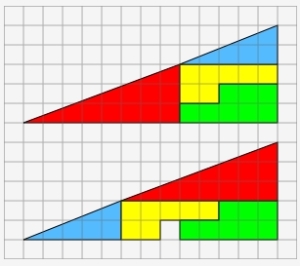
Visualising Algebra Through Geometry This picture above is a fantastic example of how we can use geometry to visualise an algebraic expression. It's taken from Brilliant - which is a fantastic new forum for sharing maths puzzles. This particular puzzle was created and uploaded by Arron Kau. The question is, which of the following mathematical... Continue Reading →
Fermat’s Theorem on the Sum of two Squares
Fermat's Theorem on the sum of two squares Not as famous as Fermat's Last Theorem (which baffled mathematicians for centuries), Fermat's Theorem on the sum of two squares is another of the French mathematician's theorems. Fermat asserted that all odd prime numbers p of the form 4n + 1 can be expressed as: where x... Continue Reading →
A Mathematician’s Lament
This is a fantastic passage - which is part of the Mathematician's Lament by Paul Lockhart. He goes into a lot more detail in the pdf (available to read here ). He really highlights some of the absurdities in how mathematics is both viewed and taught in society. A musician wakes from a terrible nightmare.... Continue Reading →
Differential Equations in Real Life
Real life use of Differential Equations Differential equations have a remarkable ability to predict the world around us. They are used in a wide variety of disciplines, from biology, economics, physics, chemistry and engineering. They can describe exponential growth and decay, the population growth of species or the change in investment return over time. A... Continue Reading →
Is Maths Invented or Discovered?
Is maths invented or discovered? One of the most interesting questions to investigate with regards to maths Theory of Knowledge (ToK) is the relationship between maths and reality. Why does maths describe reality? Are the mathematical equations of Newton and Einstein inventions to describe reality, or did they exist prior to their discovery? If equations... Continue Reading →
Investigation into the Amazing e
e's are good - He's Leonard Euler. Along with pi, e is one of the most important constants in mathematics. It is an irrational number which carries on forever. The first few digits are 2.718281828459045235... Leonard Euler e is sometime named after Leonard Euler (Euler’s number). He wasn't the first mathematician to discover e -... Continue Reading →
The Mathematics of Bluffing
This post is based on the fantastic PlusMaths article on bluffing- which is a great introduction to this topic. If you're interested then it's well worth a read. This topic shows the power of mathematics in solving real world problems - and combines a wide variety of ideas and methods - probability, Game Theory, calculus,... Continue Reading →
The Riemann Sphere
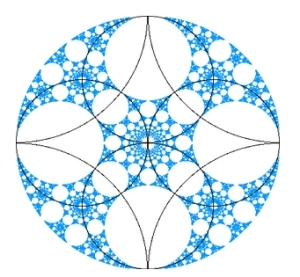
The Riemann Sphere The Riemann Sphere is a fantastic glimpse of where geometry can take you when you escape from the constraints of Euclidean Geometry - the geometry of circles and lines taught at school. Riemann, the German 19th Century mathematician, devised a way of representing every point on a plane as a point on... Continue Reading →
Divisibilty Tests and Palindromic Numbers
Divisibility tests allow us to calculate whether a number can be divided by another number. For example, can 354 be divided by 3? Can 247,742 be divided by 11? So what are the rules behind divisibility tests, and more interestingly, how can we prove them? Divisibility rule for 3 The most well known divisibility rule... Continue Reading →
Does Sacking a Manager Improve Results?
In sports leagues around the world, managers are often only a few bad results away from the sack - but is this all down to a misunderstanding of statistics? According to the Guardian, in the 21 year history of the Premier League, approximately 140 managers have been sacked. In more recent years the job is... Continue Reading →
The Chinese Remainder Theorem
The Chinese Remainder Theorem is a method to solve the following puzzle, posed by Sun Zi around the 4th Century AD. What number has a remainder of 2 when divided by 3, a remainder of 3 when divided by 5 and a remainder of 2 when divided by 7? There are a couple of methods... Continue Reading →
Steganograph Code, Can You Find the Hidden Message?
Code Crackers, can You Find the Hidden Message? The picture above looks like a normal picture of Albert Einstein - one of the world's greatest ever mathematicians. However, it's concealing a rather surprising secret. Within the picture is a hidden message. This technique of hiding messages in plain sight is called Steganography. This is a... Continue Reading →
Maths and Marking
The Battle over Homework: Marking in Mathematics Within five minutes of any teaching inspection from OFSTED, the inspector will be leafing through students’ exercise books in search of evidence of regular and meaningful marking. If it’s not there then they will probably already be penciling in the “requires improvement” column. With no-notice inspections now in... Continue Reading →
Mathematical Proof and Paradox
https://www.youtube.com/watch?v=t8XMeocLflc This classic clip "proves" how 25/5 = 14, and does it three different ways. Maths is a powerful method for providing proof - but we need to be careful that each step is based on correct assumptions. One of the most well known fake proofs is as follows: let a = b Then a2... Continue Reading →
Game Theory and Tic Tac Toe
Game Theory and Tic Tac Toe The game of Noughts and Crosses or Tic Tac Toe is well known throughout the world and variants are thought to have been played over 2000 years ago in Rome. It's a very simple game - the first person to get 3 in a row wins. In fact it's... Continue Reading →
Maths and Chess
Maths and Chess Magnus Carlsen, the 22 year old chess prodigy from Norway (pictured above), has just been crowned World Chess Champion, winning £1.4 million in the process. He beat the Indian Grandmaster Vishy Anand in a 12 match series in India with 2 games to go. Anand has been the World Champion since 2007... Continue Reading →
Knight’s Tour
The Knight's Tour is a mathematical puzzle that has endured over 1000 years. The question is simple enough - a knight (which can move as illustrated above) wants to visit all the squares on a chess board only once. What paths can it take? You can vary the problem by requiring that the knight starts... Continue Reading →
The Birthday Problem
http://www.youtube.com/watch?v=a2ey9a70yY0 The Birthday Problem One version of the birthday problem is as follows: How many people need to be in a room such that there is a greater than 50% chance that 2 people share the same birthday. This is an interesting question as it shows that probabilities are often counter-intuitive. The answer is that... Continue Reading →
War Maths – Projectile Motion
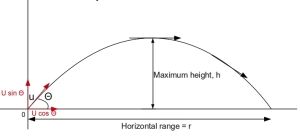
War Maths - Projectile Motion Despite maths having a reputation for being a somewhat bookish subject, it is also an integral part of the seamier side of human nature and has been used by armies to give their side an advantage in wars throughout the ages. Military officers all need to have a firm grasp... Continue Reading →
The Goldbach Conjecture
The Goldbach Conjecture is one of the most famous problems in mathematics. It has remained unsolved for over 250 years - after being proposed by German mathematician Christian Goldbach in 1742. Anyone who could provide a proof would certainly go down in history as one of the true great mathematicians. The conjecture itself is deceptively... Continue Reading →
The Gambler’s Fallacy and Casino Maths
http://www.youtube.com/watch?v=K8SkCh-n4rw The Gambler's Fallacy The above video is an excellent introduction to the gambler's fallacy. This is the misconception that prior outcomes will have an effect on subsequent independent events. The classic example for this is the gambler who watches a run of 9 blacks on a roulette wheel with only red and black, and... Continue Reading →
Maths and Music
Western music has its roots in the harmonics discovered by Pythagoras - himself a keen musician - over 2000 years ago. Pythagoras noticed that certain string ratios would produce sounds that were in harmony with each other. The simplest example is illustrated above with an electric guitar. When a string is played, and then that... Continue Reading →
School Code Challenge!
The School Code Challenge is based on a similar competition that GCHQ (The UK digital spy agency) are running. My clues will however be a little more accessible! I have created a number of codes that need to be broken. Each code will give a password. When you crack the code, follow the link and... Continue Reading →
Hexaflexagons – Amazing Shapes Investigation
http://www.youtube.com/watch?v=VIVIegSt81k Hexaflexagons - Amazing Shapes Investigation: Hexaflexagons look at first glance to be somewhat prosaic origami shapes - but like mobius strips they hide some surprises. Flexagons are paper shapes that can be folded to reveal hidden faces - and hexaflexagons themselves have six sides. What's remarkable about hexaflexagons is that during folding, some faces... Continue Reading →